01 · Where it started
Built for the team, not for merchants.
The first versions were made for internal use. The CEO and team set them up by hand for each brand they worked with, about 60 on an ongoing basis, and every change was a support request.
The flows didn’t hang together, patterns varied from screen to screen, and none of it used Polaris, Shopify’s design system. Apps on the Shopify App Store have to follow Polaris closely, so very little could be kept. It was less a redesign than designing the product from scratch.
02 · What the extensions do
Two places to sell, before and after payment.
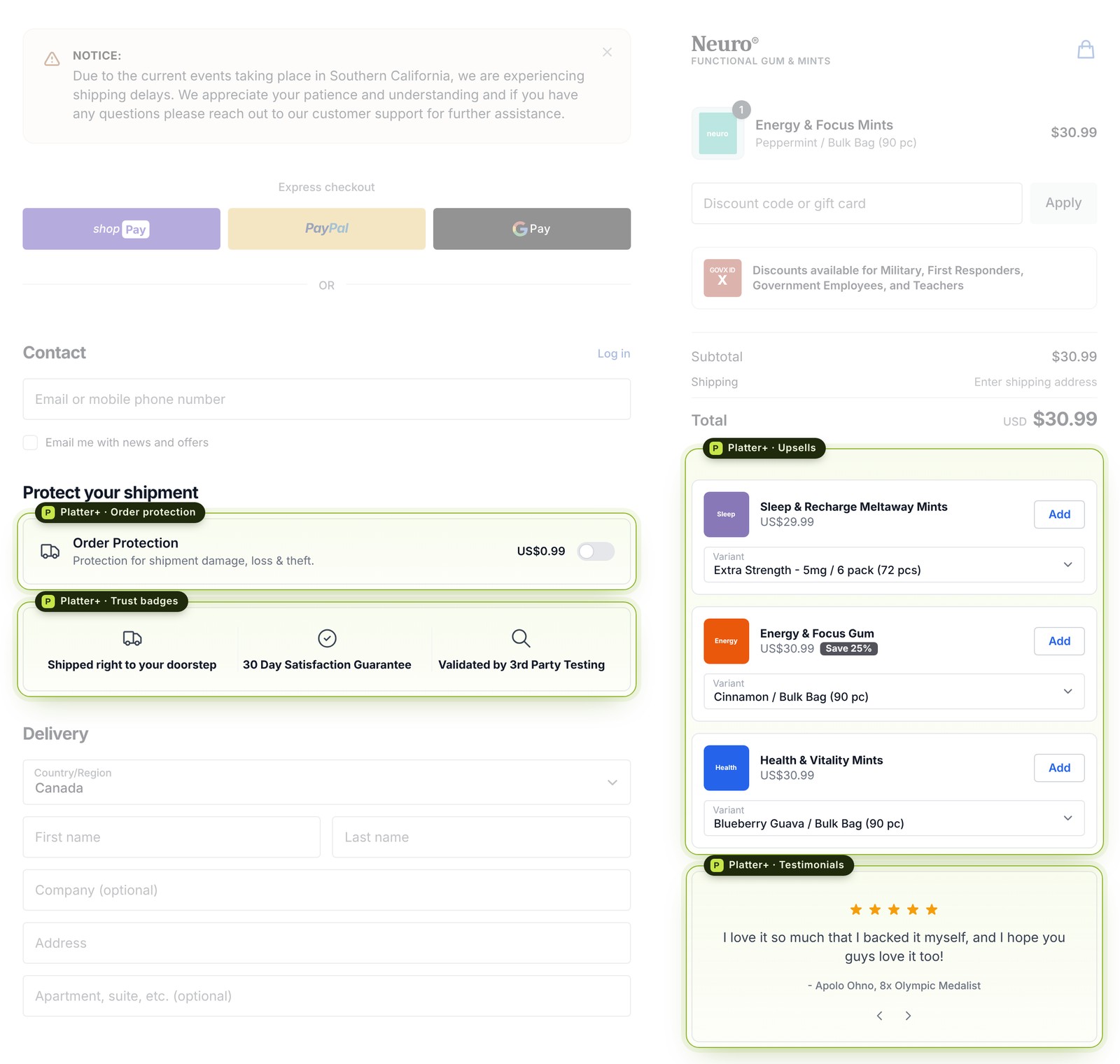
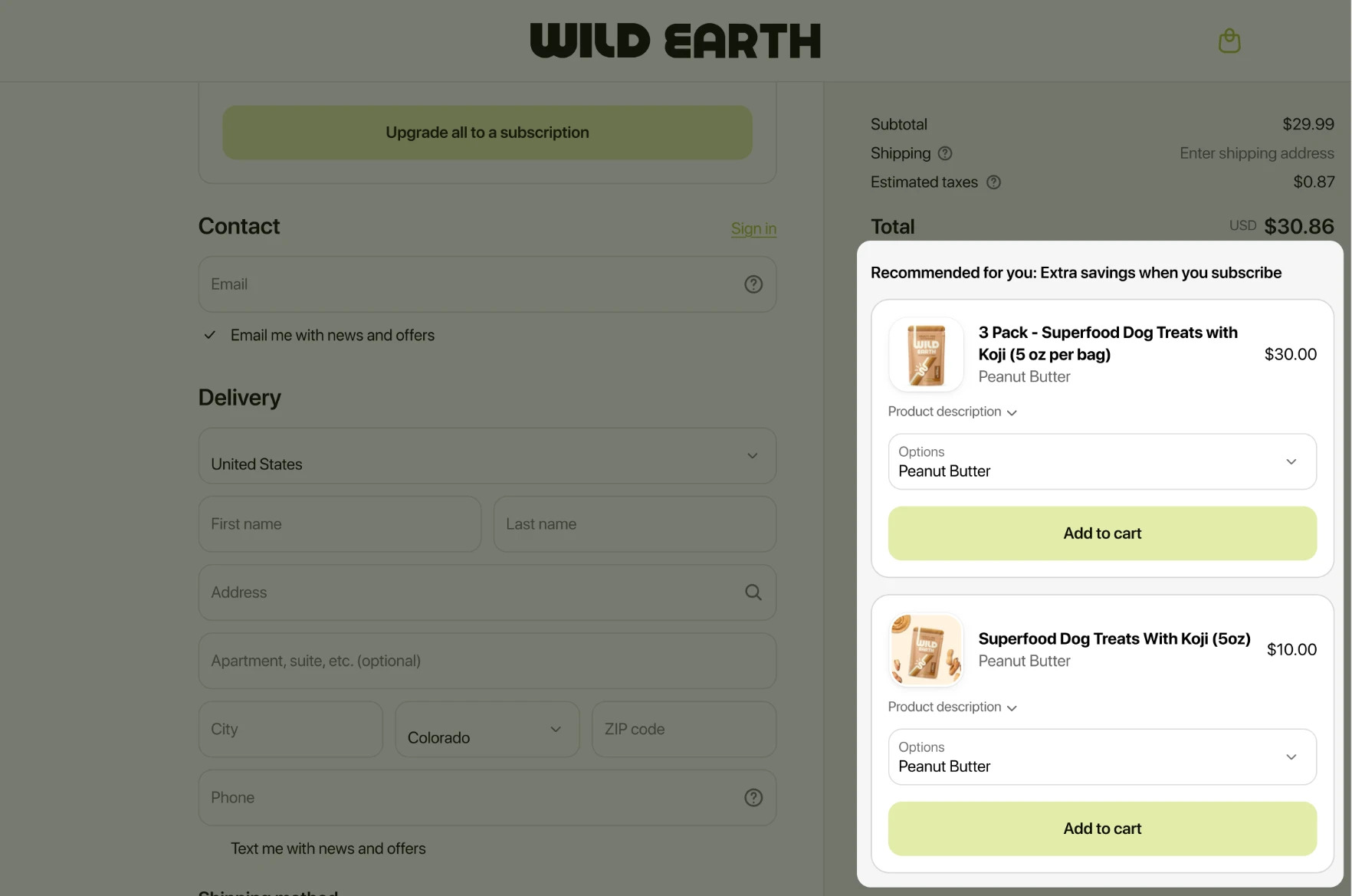
Checkout extensions add blocks to the checkout page itself: product upsells, shipping protection, trust badges and testimonials.
Post-purchase offers add a page between payment and the thank-you page. The customer can add products to the order they just paid for in one click, and still sees a single charge on their statement.
Pricing scales with results: plans are set by the revenue Platter+ processes each month, with a guaranteed 5x return.
03 · Plug and play
Set up in steps, not in a support thread.
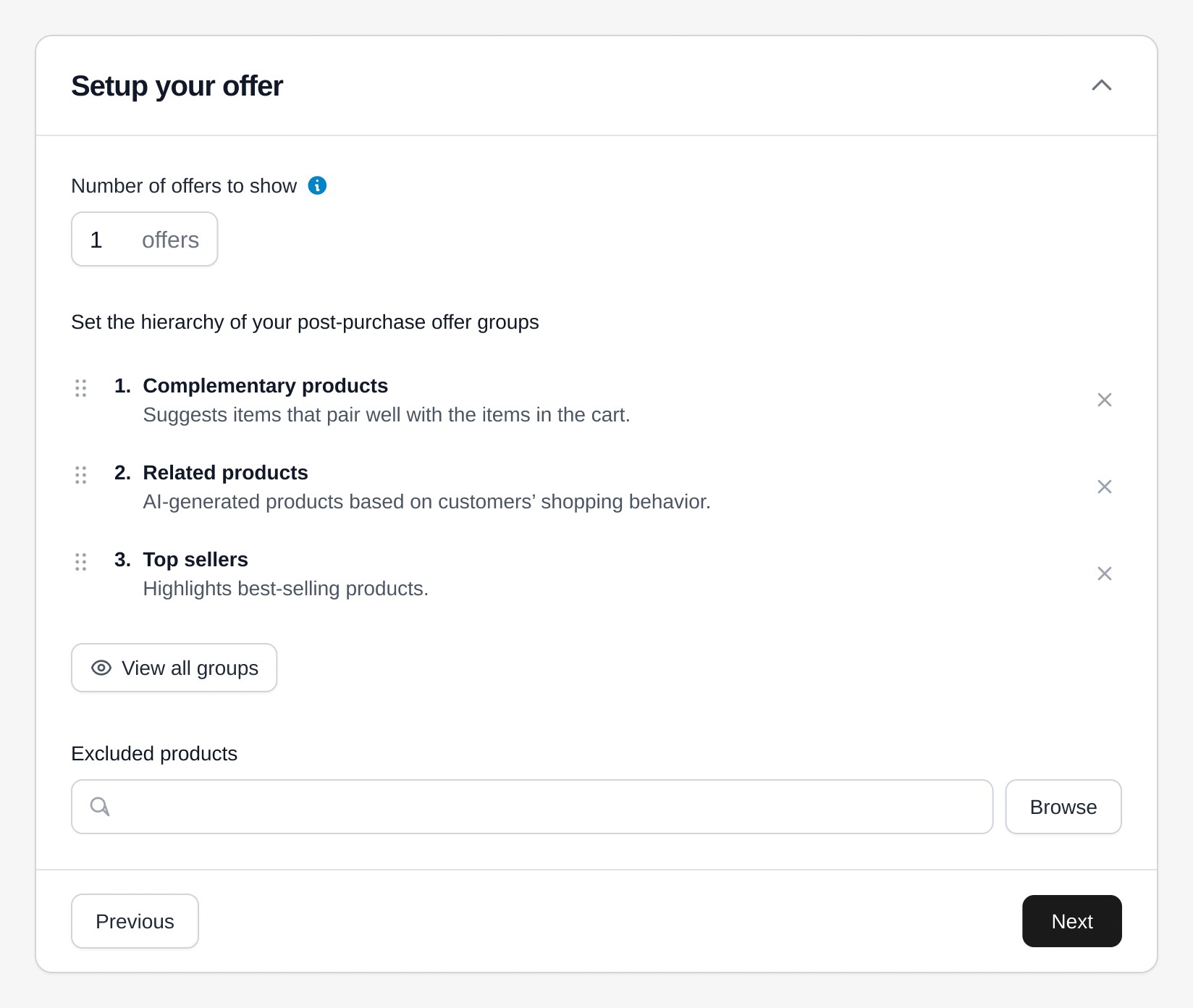
Each extension became a short guided setup, one step open at a time with Previous and Next. For post-purchase offers, merchants choose how many offers to show, drag offer groups into the order they should be tried (complementary products, AI-related products, top sellers) and exclude anything they never want offered.
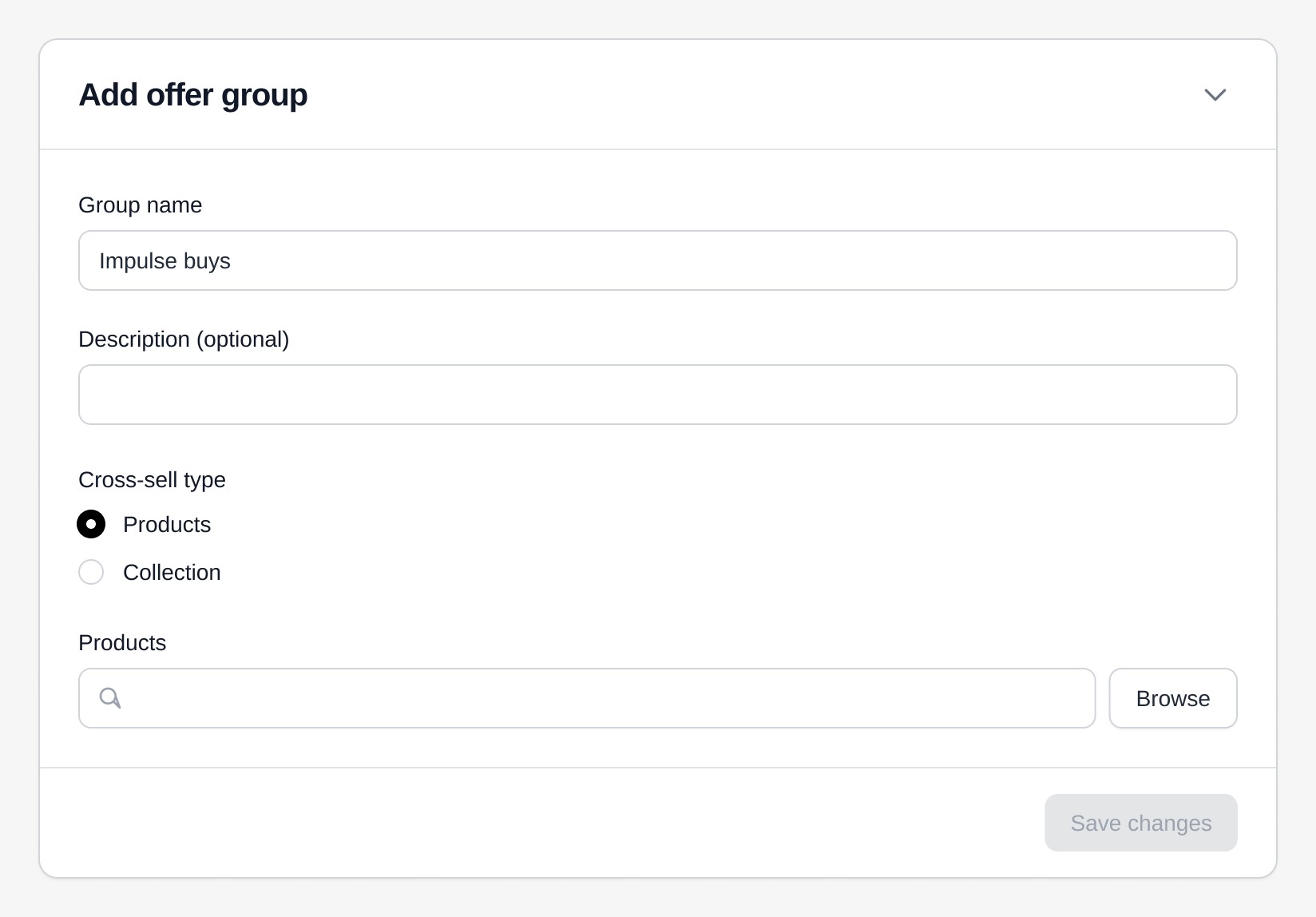
Groups are their own simple form: a name, a cross-sell type of products or a collection, and a product picker. What used to take a call with our team became a few fields.
Everything uses Polaris components, so it looks and behaves like the rest of Shopify admin.
The extension library
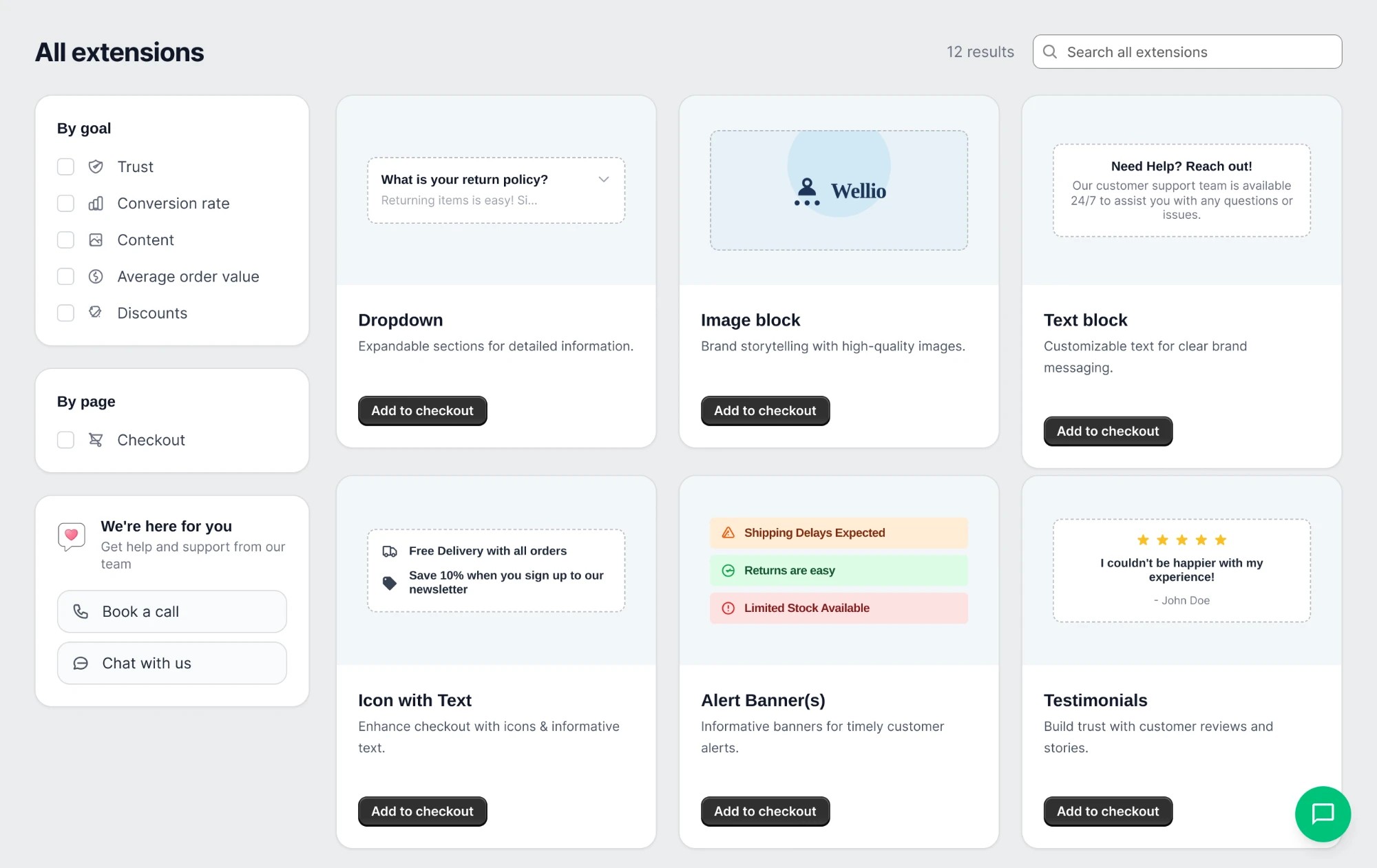
Twelve building blocks, filtered by the goal.
Merchants browse extensions by what they want to improve (trust, conversion rate, content, average order value, discounts) and see each one previewed as it will look in checkout, with one button to add it.
04 · Onboarding
From install to first revenue.
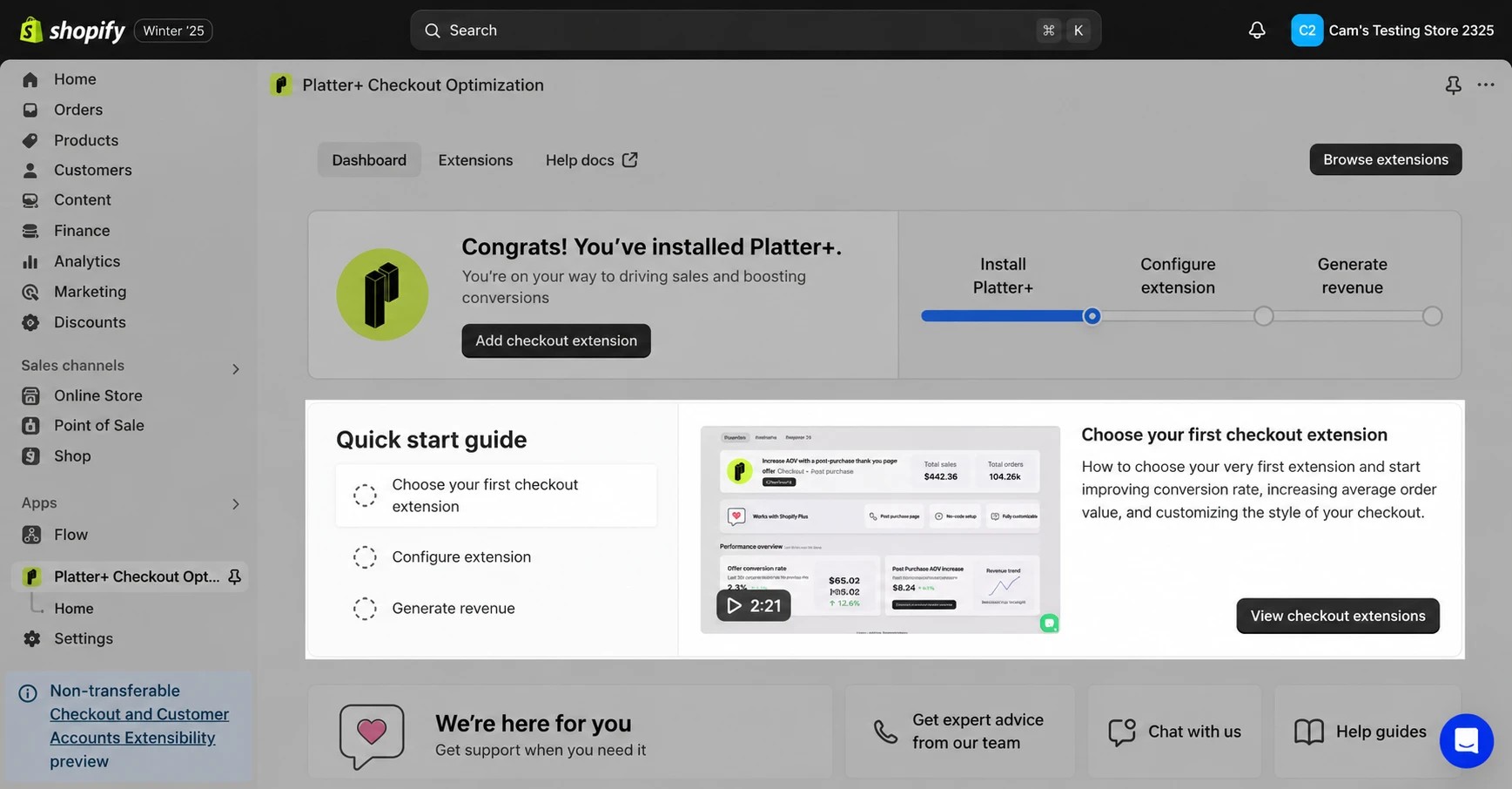
After installing, merchants land on a dashboard with a progress bar (install, configure, generate revenue) and a quick start guide. Each task has a short video next to it, so nobody has to read docs to get going.
Installing takes under two minutes: find Platter+ on the App Store, click Install, approve the permissions and subscription in Shopify, and the dashboard opens.
Onboarding videos
Choosing your first extension
Activating post-purchase offers
05 · Designing inside Shopify’s rules
Post-purchase is powerful, and fenced in.
Shopify decides when the post-purchase page appears, so the setup had to be honest about when an offer won’t show. A few of the rules that shaped it:
Card payments only
Not shown for wallets and instalments like Apple Pay, Google Pay, Klarna or Afterpay, or gift cards.
Online Store, $0.50 and up
Other sales channels and very small orders don’t qualify.
Up to three accepted offers
Per checkout, on a single post-purchase page.
One app at a time
Stores with several post-purchase apps have to pick a default in checkout settings.
06 · What happened
From a service to a product.
Setup requests
10→2Setup requests to the team each month, once brands could configure Platter+ themselves.
Month one
15Existing client stores upgraded to Platter+ in the first month after launch.
App Store
25Five-star reviews, from Shopify Plus stores.
Self-serve
~60Brands moved from hand-configured setups to self-serve.